
TL;DR
Influencer marketing ROI measures the return generated from campaigns relative to costs, calculated as (Revenue – Cost) / Cost × 100
Track both hard metrics (sales, conversions, revenue) and soft metrics (reach, engagement, brand awareness) to capture full campaign value
Set up proper attribution using UTM parameters, promo codes, affiliate links, and pixel tracking before campaigns launch
The average influencer marketing ROI is approximately $5.20 per $1 spent, though results vary by influencer tier, platform, and campaign goals
Marketing budgets face more scrutiny than ever. Influencer partnerships often sit in the crosshairs. Leadership wants proof that creator collaborations drive real business results beyond likes and comments. The challenge is that influencer marketing spans multiple platforms, touchpoints, and timeframes, making attribution genuinely difficult. Brands that master ROI measurement gain the ability to optimize campaigns, justify spend, and scale what works. Those that don’t risk cutting programs that actually perform or doubling down on partnerships that look good yet deliver little.
What Is Influencer Marketing ROI?
Influencer marketing ROI measures the financial return your brand receives from creator partnerships relative to what you invested. It answers a straightforward question about how much value you receive for every dollar spent on influencer campaigns.
The basic formula is: (Revenue – Total Cost) / Total Cost × 100
For example, if you paid a content creator $2,000 for an influencer marketing campaign and the campaign generated $5,000 in revenue, your ROI calculation would be: ($5,000 – $2,000) / $2,000 × 100 = 150% ROI.
Understanding your influencer marketing ROI matters because it transforms creator partnerships from a “nice to have” into a measurable marketing channel. When you can demonstrate concrete returns, you gain credibility for budget conversations and strategic planning.
Why Measuring Influencer Marketing ROI Matters
Measuring ROI serves several critical business functions beyond simple accountability. First, it informs budget allocation decisions. When you know which influencer partnerships deliver the strongest returns, you can shift spend toward what works and away from what doesn’t.
Second, ROI measurement enables campaign optimization. By tracking performance throughout a campaign rather than only at the end, you can adjust content, messaging, or targeting mid-flight. Third, concrete ROI data helps you demonstrate value to leadership. Marketing teams that can show clear returns earn trust and resources.
Finally, tracking ROI helps you identify your top-performing creators. Some influencers will consistently outperform others for your specific brand and audience. Without measurement, you’re guessing at who deserves long-term partnerships.
The Difference Between ROI and ROAS
Two metrics often get confused in influencer marketing discussions: ROI and ROAS. Understanding the distinction helps you communicate more precisely with stakeholders.
ROI (Return on Investment) accounts for all costs associated with a campaign. This includes influencer fees, product gifting, agency costs, content production, platform fees, and team time. The formula measures total profit relative to total investment.
ROAS (Return on Ad Spend) is narrower. It measures revenue relative to media spend only, typically the direct payment to influencers. The formula is: Revenue / Ad Spend.
For influencer marketing, ROI usually provides a more accurate picture because creator campaigns involve significant costs beyond the influencer payment itself. ROAS can still be useful for quick comparisons between campaigns or channels.
How to Calculate Influencer Marketing ROI (Step-by-Step)
Calculating influencer marketing ROI requires a systematic approach. Follow these four steps to get an accurate picture of your campaign performance.
Define Your Campaign Goals and KPIs
Before you can measure ROI, you need to establish what success looks like. Different campaign goals require different measurement approaches.
If your goal is direct sales, you’ll focus on revenue, conversion rate, and cost per acquisition. If you’re building brand awareness, you’ll track reach, impressions, and engagement alongside any sales data. For product launches, you might prioritize website traffic and email signups.
Document your primary and secondary influencer marketing KPIs before the campaign launches. This prevents the temptation to cherry-pick favorable metrics after the fact.
Calculate Your Total Investment
Many brands undercount their true campaign costs, which inflates their perceived ROI. Include all of the following in your total investment calculation:
Influencer fees include the direct payments you make to creators for their content and promotion.
Product gifting covers the retail value of any products you send to influencers as part of the campaign.
Agency fees apply if you work with an influencer marketing agency or platform to manage your campaigns.
Content production encompasses any additional costs for photography, video editing, or creative support you provide.
Platform costs include subscription fees for any influencer marketing tools you use.
Team time accounts for the hours your internal team spends managing the campaign, which is often overlooked in cost calculations.
For example, a campaign might have a $3,000 influencer fee, yet the true total cost reaches $4,500 when you factor in $500 in gifted products, $200 in platform fees, and $800 in team time.
Measure Your Returns (Revenue and Non-Monetary Value)
Track influencer conversions by capturing all revenue directly attributable to the campaign. This includes sales made using promo codes, purchases through affiliate links, and conversions from campaign-specific landing pages.
For campaigns focused on awareness rather than immediate sales, you’ll need to assign value to non-monetary returns. Some brands calculate earned media value (EMV) based on what equivalent paid reach would cost. Others track downstream metrics like email signups and assign a value per lead based on historical conversion rates.
Be consistent in how you value non-monetary returns across campaigns so you can make fair comparisons.
Apply the ROI Formula
With your total costs and returns calculated, apply the ROI formula:
(Revenue Generated – Total Campaign Cost) / Total Campaign Cost × 100
Using our earlier example with the full cost picture: if the campaign generated $8,000 in revenue with a total cost of $4,500, your ROI would be: ($8,000 – $4,500) / $4,500 × 100 = 77.8% ROI.
For ROAS, the calculation is simpler: $8,000 / $3,000 (influencer fee only) = 2.67x ROAS, meaning you earned $2.67 for every $1 spent on influencer fees.
Key Metrics to Track for Influencer Marketing ROI
The ROI of an influencer marketing campaign can be difficult to measure without the right strategy. You need systems in place to track the amount that people spend on your products due to influencer posts.
There are other measurements of influencer marketing ROI that aren’t about financial gain. For instance, maybe you’re partnering with an influencer to boost your engagement or increase your follower count.
Depending on your desired outcome, there are multiple key performance indicators (KPIs) to track. Organizing these into categories helps you understand the full picture of campaign performance. These tracking strategies work whether you’re an established brand or an individual creator learning how to monetize content through partnerships.
To learn more about KPIs during an influencer marketing campaign, check out this blog about influencer marketing statistics.
Conversion Metrics (Hard ROI)
Conversion metrics tie directly to business outcomes and are typically the primary focus for ROI calculations:
Sales revenue represents the total dollars generated from purchases attributed to your campaign.
Conversion rate measures the percentage of clicks that actually result in purchases.
Cost per acquisition (CPA) tells you your total campaign cost divided by the number of new customers you acquired.
Lead generation tracks the number of email signups, account creations, or form submissions your campaign drives.
App downloads matter for brands with mobile apps, measuring installs driven by influencer content.
These metrics provide the clearest picture of financial return and are easiest to defend in budget conversations.
Awareness and Engagement Metrics (Soft ROI)
Awareness metrics capture value that doesn’t immediately translate to revenue yet builds long-term brand value:
Reach captures the total number of unique users who saw the influencer’s content.
Impressions count the total number of times the content was displayed, including repeat views.
Engagement rate measures likes, comments, shares, and saves as a percentage of reach.
Follower growth tracks new followers gained on your brand’s accounts during the campaign period.
Website traffic measures visitors driven to your site from influencer content.
Earned media value (EMV) estimates the value of your exposure based on what equivalent paid media would cost.
When direct sales attribution isn’t possible (common for awareness-focused campaigns), these metrics help demonstrate campaign impact.
How to Set Up Tracking for Influencer Campaigns
Calculating the ROI of an influencer marketing campaign using social media alone is difficult because it’s impossible to know the exact impact of a post. If a content creator posts about your brand and 200 people like the post, it’s difficult to know how many of those people actually purchased your products.
Helpful tracking methods exist that you can use to more accurately measure campaign performance. Setting up proper attribution infrastructure before campaigns launch is essential for every creator and brand partnership.
UTM Parameters and Custom Links
UTM parameters are tags added to URLs that allow you to track traffic sources in Google Analytics or other analytics platforms. For influencer campaigns, create unique UTM-tagged links for each creator.
A well-structured UTM link might look like: yoursite.com/product?utm_source=instagram&utm_medium=influencer&utm_campaign=summer2026&utm_content=creator_name
Best practices for UTM tracking:
Use consistent naming conventions across all campaigns
Create a tracking spreadsheet to document all links and their assignments
Keep UTM values lowercase to avoid duplicate entries in analytics
Include the creator name in utm_content for individual attribution
Promo Codes and Affiliate Links
You can provide the influencer with a discount code that they can share with their followers. Most promo codes offer between 10 to 20% off. You can track how many people make purchases using that discount code to measure the success of the influencer marketing campaign.
Another option is to provide the influencer with a custom link, also known as an affiliate link, that their followers can use to shop. You can track how many people click on the link and how many go on to purchase from your brand. These affiliate marketing tools help every creator build sustainable creator income while giving brands clear performance data.
Best practices for promo code tracking:
Create unique codes for each influencer (e.g., SARAH20, MIKE15)
Set codes to expire after the campaign period to maintain accurate attribution
Configure your e-commerce platform to capture code usage in order data
Consider tiered discounts for different influencer tiers or campaign phases
There are several types of influencers, and some prefer to use discount codes versus affiliate links, or vice versa. The more you work with content creators, the easier it will be to measure which affiliate marketing tools are the most lucrative for your brand.
Pixel Tracking and Landing Pages
Pixel tracking allows you to follow user behavior after they click through from influencer content. Install conversion pixels on key pages (product pages, cart, checkout confirmation) to track the full customer journey.
Dedicated landing pages for influencer campaigns provide another layer of attribution clarity. When an influencer directs followers to a unique URL (e.g., yoursite.com/sarah), all traffic and conversions from that page are clearly attributed to that partnership.
Additional tracking considerations:
Set up retargeting pixels to capture influencer-driven traffic for future campaigns
Use CRM integration to connect influencer-attributed leads to downstream revenue
Implement post-purchase surveys asking “How did you hear about us?” as a backup attribution method
Attribution Models for Influencer Marketing
Influencer attribution is one of the most challenging aspects of ROI measurement. Customers rarely see one piece of content and immediately purchase. They might discover your brand through an influencer, research on your website, see a retargeting ad, and then buy a week later. Which touchpoint gets credit?
First-Touch vs. Last-Touch Attribution
First-touch attribution gives 100% of the credit to the first interaction a customer had with your brand. This model favors awareness-driving channels, including influencer marketing. If someone first discovered your brand through an influencer post, that influencer gets full credit for the eventual sale.
Last-touch attribution gives 100% of the credit to the final interaction before purchase. This model often undervalues influencer marketing because creators typically operate at the awareness stage of the customer journey. A customer might discover you through an influencer yet convert through a Google search or email, giving those channels the credit.
Neither model tells the complete story. Understanding their biases helps you interpret your data correctly.
Multi-Touch and Data-Driven Attribution
Multi-touch attribution distributes credit across multiple touchpoints in the customer journey. Common models include:
Linear attribution gives equal credit to all touchpoints in the customer journey.
Time decay attribution gives more credit to touchpoints that occur closer to the conversion.
Position-based attribution assigns 40% credit to the first touch, 40% to the last touch, and distributes the remaining 20% among middle interactions.
Data-driven attribution uses machine learning to analyze your specific conversion patterns and assign credit based on actual impact. This requires significant data volume (typically thousands of conversions), though it provides the most accurate picture.
For most brands, a position-based model offers a reasonable balance that acknowledges influencer marketing’s role in discovery while also crediting conversion-driving touchpoints.
Why Measuring Influencer Marketing ROI Is Challenging
Tracking an influencer marketing campaign can be complicated for several reasons:
Multi-platform complexity: If you are running campaigns across multiple social media platforms, each platform has its own way of tracking metrics. Consolidating data requires manual work or specialized tools.
Multiple simultaneous campaigns: You will need to track creator performance for each content creator separately, which can get complicated if you are not organized. Without clear naming conventions and tracking infrastructure, data gets messy fast.
Intangible returns: Some of the returns from an influencer marketing campaign are not tangible and therefore, hard to track. For example, a campaign may help raise your brand awareness, which can be difficult to measure with data related to the influencer.
Delayed conversions: Customers often don’t purchase immediately after seeing influencer content. The gap between exposure and conversion can span days or weeks, making attribution difficult.
Cross-device behavior: A user might see an influencer’s post on their phone yet purchase later on their laptop. Without sophisticated cross-device tracking, this conversion may not be attributed to the influencer.
Understanding these challenges helps you set realistic expectations and build tracking systems that account for inherent limitations.
Average Influencer Marketing ROI Benchmarks for 2026
According to Influencer Marketing Hub’s 2026 Benchmark Report, the average return rate on an influencer marketing campaign is approximately $5.20 per $1 spent. This benchmark can vary significantly by brand, industry, influencer tier, and campaign goals.
Top-performing campaigns can achieve $10 or more per dollar invested, while poorly targeted or executed campaigns may struggle to recover their costs. The wide range reflects how much strategy and execution matter.
Factor | Lower ROI Range | Higher ROI Range |
|---|---|---|
Industry average | $4-5 per $1 | $6-8 per $1 |
Top performers | $8-10 per $1 | $15+ per $1 |
Awareness campaigns | $2-3 per $1 (EMV-based) | $5-6 per $1 |
Direct response campaigns | $5-6 per $1 | $10+ per $1 |
When evaluating your own results against influencer ROI benchmarks, consider your specific goals, product price point, and industry norms. A 3x return might be excellent for a luxury brand with long sales cycles, yet underwhelming for an impulse-purchase product.
Factors That Influence Your Campaign’s ROI
Multiple variables affect your influencer marketing ROI. Understanding these factors helps you set realistic expectations and optimize future campaigns.
Influencer Tier (Nano, Micro, Macro, Mega)
A common misconception is that partnering with influencers who have hundreds of thousands of followers will bring in the highest return on investment. The truth is that campaigns with micro-influencers (content creators with less than 100,000 followers) can be even more lucrative.
Micro-influencers have specialized, focused audiences, so it’s easier to reach your target customers. They also tend to have higher engagement rates than mega-influencers, so their campaigns can be more effective.
Lastly, since their fees are lower, you can work with several micro-influencers at once versus one mega-influencer. This spreads out your marketing efforts across multiple audiences and platforms.
Influencer Tier | Follower Count | Typical Cost | Engagement Rate | ROI Potential |
|---|---|---|---|---|
Nano | 1K-10K | $50-500 | 5-8% | High (niche audiences) |
Micro | 10K-100K | $500-5K | 3-5% | High (engaged communities) |
Macro | 100K-1M | $5K-50K | 1-3% | Medium (broad reach) |
Mega | 1M+ | $50K+ | 0.5-1.5% | Variable (brand awareness) |
Platform Selection
Different influencer platforms deliver different ROI profiles based on audience behavior and content format:
TikTok excels at discovery and viral potential with younger demographics, and while video-first content drives strong engagement, attribution can be challenging.
Instagram offers versatile format options like Reels, Stories, and posts, along with strong shopping features that create a good balance of reach and conversion.
YouTube allows for longer content with detailed product demonstrations, making it strong for considered purchases, and the content has a longer lifespan.
Pinterest attracts a high purchase intent audience, and content has a long shelf life, making it particularly effective for home, fashion, and lifestyle products.
Match your platform selection to where your target audience spends time and how they prefer to discover products. These social selling tips apply whether you’re managing brand campaigns or building creator income through strategic platform choices.
Content Format and Product Price Point
Content format significantly impacts conversion rates. Video content typically outperforms static images for demonstrating product value, especially for products that benefit from demonstration. Static posts can still be highly effective for visually striking products or simple value propositions.
Product price point affects ROI expectations. Lower-priced impulse purchases convert more easily from influencer content, potentially delivering higher ROI percentages. Higher-priced products may show lower immediate ROI, yet they can still be profitable given larger order values.
Consider your product’s typical consideration period when setting ROI timelines. A $20 skincare product might convert within days, while a $500 piece of furniture might take weeks.
How to Maximize Your Influencer Marketing ROI
Once you understand how to measure ROI, the next step is optimization. These strategies help you maximize influencer ROI across campaigns:
Align influencer audiences with your target customers: The most engaged audience means nothing if they’re not potential buyers. Prioritize audience fit over follower count.
Negotiate usage rights for top-performing content: Repurpose high-performing influencer content in paid ads, email marketing, and on your website to extend its value beyond the initial post.
Test different content formats: Run A/B tests with different content types (video vs. static, long-form vs. short-form) to identify what resonates with each influencer’s audience.
Build long-term partnerships: Ongoing relationships with creators often outperform one-off campaigns. Audiences respond better to authentic, repeated endorsements.
Optimize posting timing: Work with influencers to post when their audiences are most active. Review past performance data to identify optimal windows.
Provide clear briefs while allowing creative freedom: Give influencers the information they need about your product and goals, yet let them communicate in their authentic voice.
Track and iterate continuously: Don’t wait until campaign end to review performance. Monitor metrics throughout and adjust strategy based on what’s working.
Common Influencer Marketing ROI Mistakes to Avoid
Even experienced marketers make measurement errors that skew their understanding of campaign performance. Avoid these common pitfalls:
Focusing only on vanity metrics is a common trap. Likes and comments feel good, yet they don’t pay the bills. Always connect engagement metrics to business outcomes.
Failing to set up tracking before launch creates major problems because retroactive attribution is nearly impossible. Establish your tracking infrastructure before the first post goes live.
Using inconsistent attribution methods undermines your analysis. If you use last-touch attribution for one campaign and first-touch for another, you can’t compare results meaningfully.
Ignoring the full cost picture skews your data. Undercounting costs inflates your perceived ROI and leads to poor budget decisions.
Setting unrealistic timelines leads to premature conclusions. Some campaigns, especially awareness-focused ones, take time to show results. Don’t declare failure after a week.
Comparing across incompatible campaigns gives you misleading insights. A brand awareness campaign and a direct response campaign have different goals and should be evaluated against different benchmarks.
Track Influencer Marketing ROI with Mavely
The easiest way to track the ROI of an influencer marketing campaign is to join Mavely, an affiliate marketing platform that simplifies the entire process for every creator and brand partnership.
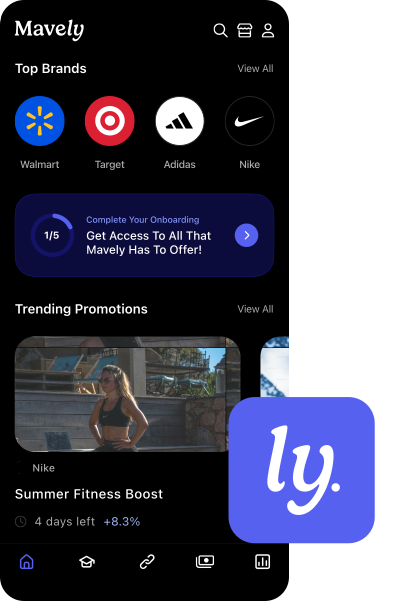
Mavely, now part of Later as of January 2025, connects brands to content creators and facilitates each part of the influencer marketing campaign. The platform offers SmartLinks that provide trackable, shoppable links you can use to measure the return on your campaigns. You’ll know when an influencer’s followers use the link and make purchases right away.
Beyond basic tracking, Mavely provides creators with tools like MyShop (customizable storefronts), a browser extension for easy link creation, Mavely Boosts for enhanced earning opportunities, and Teams functionality for collaborative campaigns. Mavely analytics give both brands and creators clear visibility into performance metrics, helping every creator build sustainable creator income while brands optimize their spend.
For brands looking to track creator performance and optimize influencer partnerships, Mavely’s infrastructure handles the attribution complexity so you can focus on strategy and relationships.
Get started with your next influencer marketing campaign on Mavely today, or Join Mavely today as a creator.
Frequently Asked Questions
What is the average ROI for influencer marketing?
The average ROI for influencer marketing is approximately $5.20 per $1 spent, though results vary significantly by industry, influencer tier, and campaign goals. Top-performing campaigns can achieve $10 or more per dollar invested, while awareness-focused campaigns may show lower immediate returns yet build long-term brand value.
How do I calculate influencer marketing ROI?
Calculate influencer marketing ROI using the formula: (Revenue Generated – Total Campaign Cost) / Total Campaign Cost × 100. Include all costs in your calculation: influencer fees, product gifting, agency fees, platform costs, and team time. This gives you a percentage that represents your return relative to investment.
What metrics should I track for influencer campaigns?
Track both conversion metrics (sales, revenue, leads) and awareness metrics (reach, engagement, follower growth) to capture the full value of influencer campaigns. Prioritize metrics that align with your specific campaign goals, whether that’s direct sales, brand awareness, or audience growth.
How do I attribute sales to specific influencers?
Attribute sales to specific influencers using unique tracking methods like UTM parameters, personalized promo codes, affiliate links, or dedicated landing pages. Set up these tracking mechanisms before campaigns launch and use consistent naming conventions to keep data organized across multiple creators.
What is a good ROI for influencer marketing?
A good influencer marketing ROI typically ranges from $4 to $6 per $1 spent, though top-performing campaigns can achieve $10 or more per dollar invested. What counts as “good” depends on your industry, product price point, and campaign objectives. Compare your results against your own historical performance and industry benchmarks.
How long does it take to see ROI from influencer marketing?
Most brands see measurable ROI from influencer marketing within 30 to 90 days, though brand awareness campaigns may take longer to show full impact. Lower-priced products with shorter consideration periods typically convert faster than high-ticket items that require more research before purchase.
What is the difference between influencer ROI and ROAS?
ROI (Return on Investment) measures total profit relative to all campaign costs, while ROAS (Return on Ad Spend) measures revenue relative to media spend only. For influencer marketing, ROI typically provides a more complete picture because campaigns involve costs beyond influencer payments, including product gifting, platform fees, and team time.
Do micro-influencers have better ROI than macro-influencers?
Micro-influencers often deliver higher ROI than macro-influencers due to their specialized, focused audiences, higher engagement rates, and lower partnership costs. Their followers tend to trust their recommendations more, leading to better conversion rates. Macro-influencers can still be valuable for broad awareness goals where reach matters more than engagement depth.
What are common mistakes when measuring influencer ROI?
Common mistakes include focusing only on vanity metrics, failing to set up tracking before campaigns launch, using inconsistent attribution methods, and setting unrealistic timelines for results. Many brands also undercount their true campaign costs, which inflates perceived ROI and leads to poor budget allocation decisions.
How can I improve my influencer marketing ROI?
Improve influencer marketing ROI by aligning campaigns with clear business goals, choosing influencers whose audiences match your target customers, testing different content formats, and optimizing based on performance data. Building long-term partnerships with top performers and negotiating content usage rights also extends the value of your investment.